
If you are looking for a way to increase the engagement in your course consider Game-based Learning (GBL)! Research shows that integrating relevant games in your classroom increases interest and motivation towards your course work. Using the built in motivators like story-lines, gameplay and challenge/reward feedback loops students engage without necessarily feeling like they’re learning. GBL can help foster problem-solving skills and critical thinking while also helping develop communication and collaboration among your students.
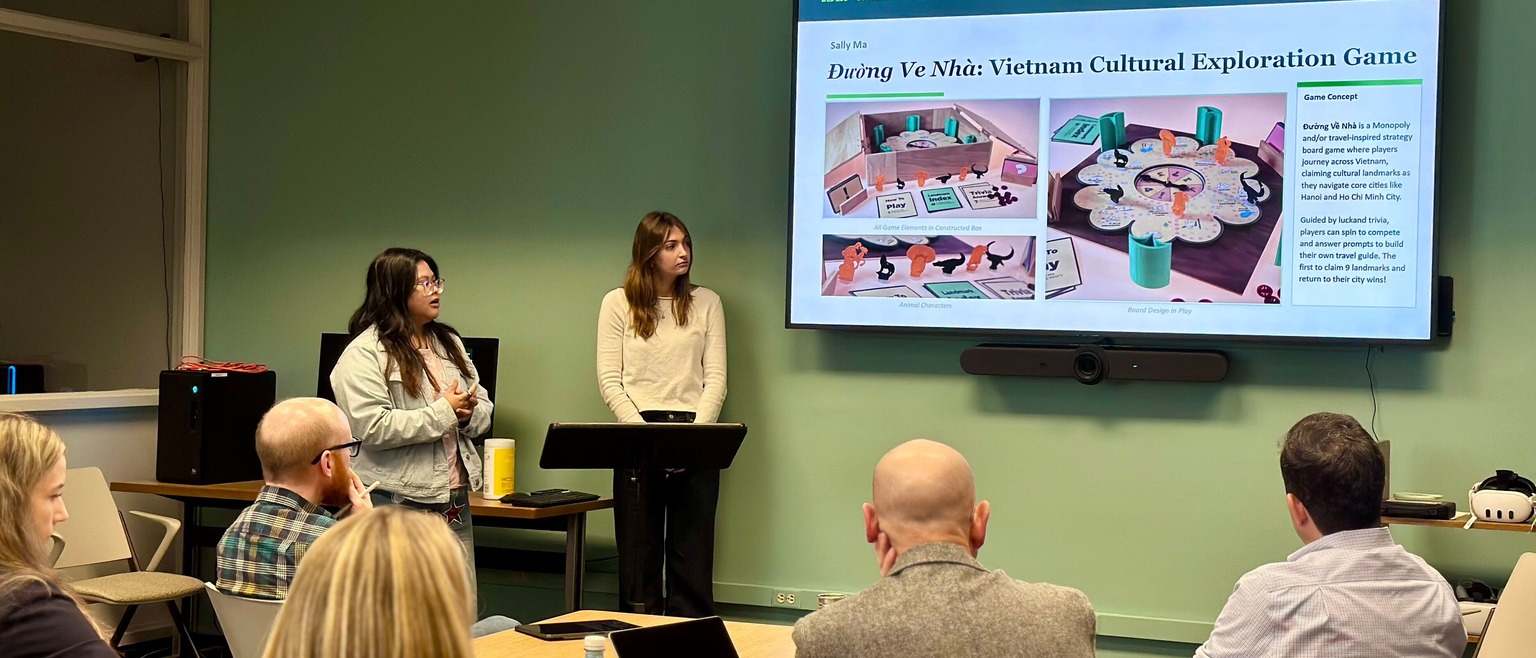
At Lehigh we have used GBL in various ways from students creating their own games, playtesting virtual experiences, or using a video based choose your own adventure game for review.
GBL involves using games in your class to help define and support your learning outcomes, where Gamification uses gaming elements in non-gaming settings. Badging and leaderboards are common gamification elements in education.
- First, is GBL even right for your class? While GBL is a great way to engage students in your class, not might not be a great fit for your cohort, subject or setting.
- Do you want your students to play a game or create a game? Students can showcase their knowledge by creating a game about the subject or as a review of the coursework.
- Select a game that matches your learning objectives. GBL is most effective when the gameplay, setting and storyline match the learning objectives of your course.
- What type of gaming experience would you like your students to play? At Lehigh we have had students learn through video games, XR experiences and physical gaming. Roleplaying and board games can be just as effective as video games for learning experiences.
- How are your students going to access the game? There are time, cost and skill gap considerations while implementing GBL. Do the students have to buy the game? Or is the game on a platform they don’t have access to? A lot of board games might take longer to play than your class period. Also some games might take awhile to become proficient in, make sure the students have enough time to get the full experience.
- How are you going to assess the learning? If playing in class you can observe engagement and performance, but consider offering students a chance to reflect on their experience. You can also have your students make short review videos to talk about their experience and how the game ties back to the coursework.
- “Introduction to the Use of Gamification in Higher Education” - University of Chicago (2021)
- “A Proof-of-Concept Study of Game-Based Learning in Higher Education” - Simulation & Gaming (2016)
- “How Can Game-based Learning Improve Student Achievement in STEM?” - NC State (2023)
- “What Does Game-Based Learning Offer Higher-Ed” - Gonzaga University (2023)
- “Oregon Trail, Carmen Sandiego, And Other ‘Edutainment'” - Triple Click (2022)
- “Exploring Differences in Student Learning and Behavior Between Real-life and Virtual Reality Chemistry Laboratories” - Journal of Science Education and Technology (2021)
- Foundations of Game-Based Learning - Educational Psychologist (2016)
- Digital game-based learning: Impact of instructions and feedback on motivation and learning effectiveness - Computers & Education (2013)
- Teaching with Video Games - Hey Listen Games
- “Game-based Learning” - Handbook of Research on Educational Communications and Technology (2014)
- “Maker-Minecraft mashup brings social studies to life” - ISTE (2015)
- “Civic Engagement Through Digital Games” - Edutopia (2014)
- “Level Up: Gamification and Game Based Learning in Higher Ed” - Speaking of Higher Ed (2025)
- “Role-playing Games Used as Educational and Therapeutic Tools for Youth and Adults” (2008)
- “Dungeons, Dragons, and Durable Skills: How Tabletop Role-Playing Games Make SEL and Academics into an Adventure for Students” - Next Gen Learning (2023)
- “Imaginative Role-Playing as a Medium for Moral Development: Dungeons & Dragons Provides Moral Training“ - Journal of Humanistic Psychology (2017)
- “There and Back Again: Nostalgia, Art, and Ideology in Old-School Dungeons and Dragons” - Games and Culture (2012)
- “Educational game design for online education” - Computers in Human Behavior (2008)
- “Video Gaming Made Me A History Major” - BRIGHT Magazine (2015)
- “A meta-analysis of the cognitive and motivational effects of serious games” - Journal of Educational Psychology (2013)
- “Game-Based Learning” - Handbook of Research on Educational Communications and Technology (2013)
- “Game-Based Learning” - Instructional Technologies Committee ALA (2015)
- “Successful implementation of user-centered game based learning in higher education: An example from civil engineering” - Computers & Education (2007)
- “Why and How to Define Educational Video Games?” - Games and Culture (2023)
- “Game-based learning in medical education“ - Front Public Health (2023)
- “Game-Based Learning in Neuroscience” - Neurology Education (2023)

CITL Game Lab
The CITL Game Lab is a collection of student created games in CITL supported classes.
Gaming & Game Studies CoP
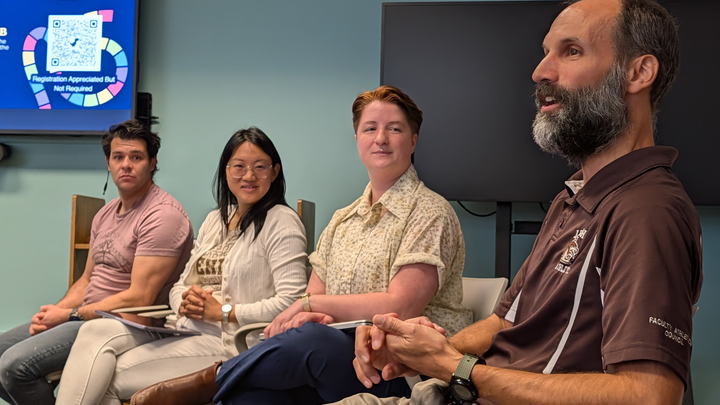
Interested in meeting colleagues interested in gaming & game studies? Join our community of practice!
Through playing and creating games, students develop problem-solving skills, promote critical thinking, and create meaningful relationships with their peers. Virtual worlds help students learn about the real world. They learn through play
Andrew Phelps, President, Higher Education Video Game Alliance & Stanley Pierre-Louis, President & Chief Executive Officer, Entertainment Software Association